When a parent is in your office
Families who already know how their child’s communication is going, clinicians whose work reaches home, and IEP meetings with the evidence on the table.
Does this sound familiar?
Families come to you first
“Is it working? Nobody tells me anything.” And the SLP is only in the building on Tuesdays.
You know the least in the IEP meeting
You sit in as the district’s representative, and the evidence of progress is mostly in someone’s memory.
You cannot see whether sessions happen
Services slip, and you hear about it from a parent rather than from a record.
How it works
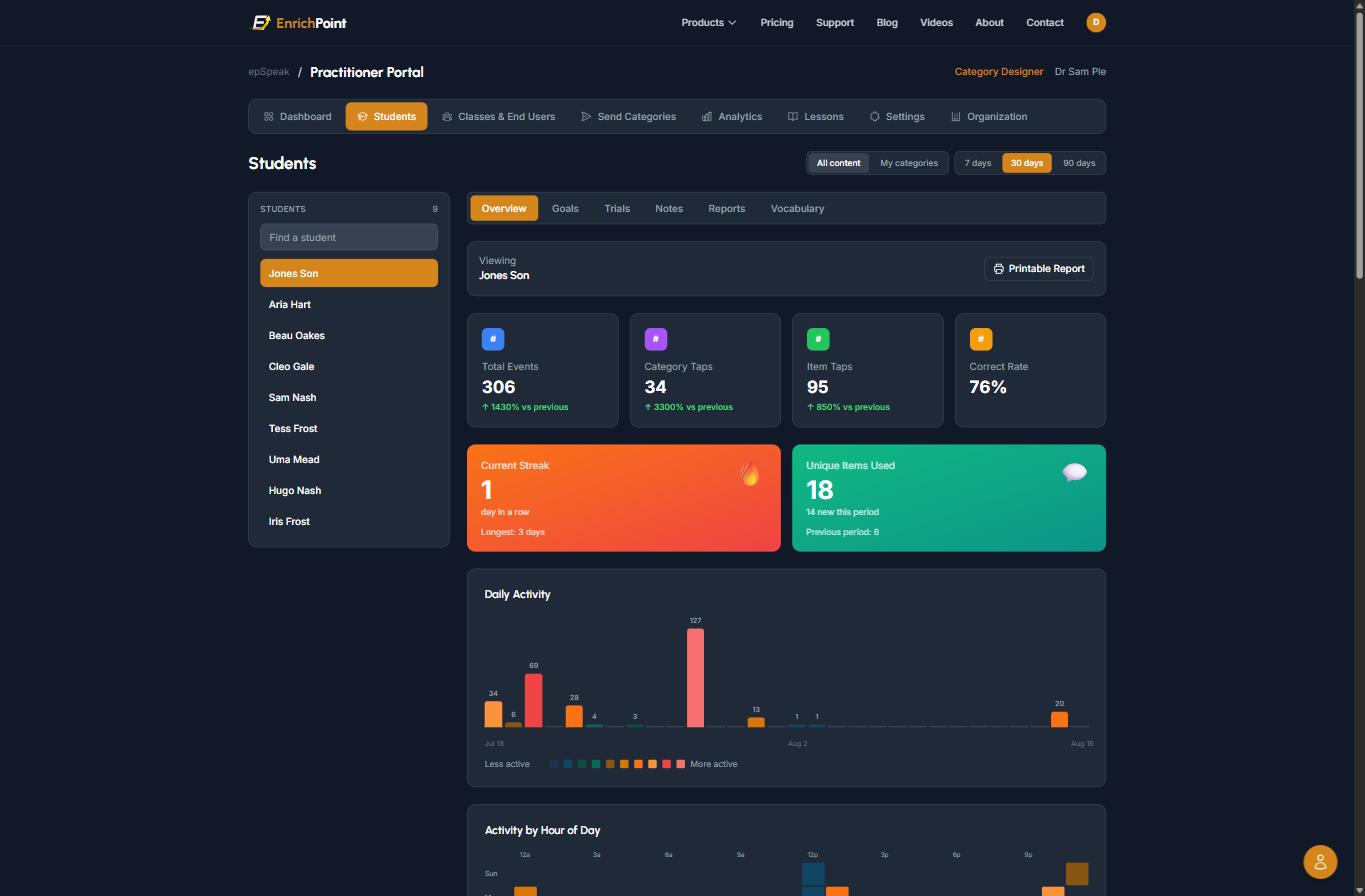
Real screens from our demonstration district. The students are invented; nothing else is.
What the SLP sees
Everything a student does on their own communication device is counted: how often, when in the day, and the words they used for the first time this period. Goals show progress, including whether the student did it independently or with help, which is the question parents actually ask.
What reaches home
The SLP can share a note with the family, which they read in their free app and can reply to, and share progress reports once they are signed. Private clinical notes stay private. Sharing is the clinician’s choice, note by note, and the family can keep notes of their own within the family.
The IEP meeting
The SLP brings a dated evidence pack: every goal and the evidence behind it, and the words the student used for the first time. It also names any goal without enough data yet, which is why families believe the rest of it.

Services in your building
Where the district switches on service delivery, your director can see, school by school, which students are getting fewer minutes than their IEP promises.
What it is, and is not
Support, not surveillance
It helps adults support a child’s communication. It is not a record of everything a child says, and it is not built to be.
Families approve first
Nothing is shared with a clinician until the family approves the connection.
The child never pays
The app a student uses is free, permanently. That is policy.
What it does not do yet
Better you hear it here than halfway through a term.
- There is no principal login. Building-level views come from the district’s view, through your director or a clinical lead.
- It is not Medicaid billing.
- Automatic proposals come from epSpeak. Students on other AAC systems can have trials logged by hand.
Questions
Won’t this mean more screen time?
For a student who cannot speak, the device is their voice: how they ask for help, say no, or say something hurts. This makes sure the adults around them can support that.
Won’t parents be on the SLP’s back all day?
The SLP decides what is shared, note by note. A short shared note is usually quicker than the phone call or email chain that happens when families do not know.
The district decides what we buy.
Then the most useful thing is to introduce us to your director and have your SLP try a free week. A principal who says “my families and my SLP want this” carries weight.
We are a charter or private school.
Then you may be the buyer. Clinicians can start a free week today, and for a school it is licensed per clinician, never per student, so enrolling more students who need support costs no more.
See it with your SLP
Book a demo and bring your SLP, or send them their page first. It takes them a week to know whether it helps.