Where every number comes from
Which devices went quiet, which goals cannot yet be defended, and the confirmed data underneath every report.
Does this sound familiar?
You find out at the annual review
You placed the device in September. In May the SLP says “he doesn’t really use it”, and a term of communication is gone.
You sign off on data you cannot see
The evidence behind a colleague’s report lives in their notebook.
Everyone measures differently
Prompt levels and mastery criteria vary by clinician, so the numbers do not mean the same thing.
How it works
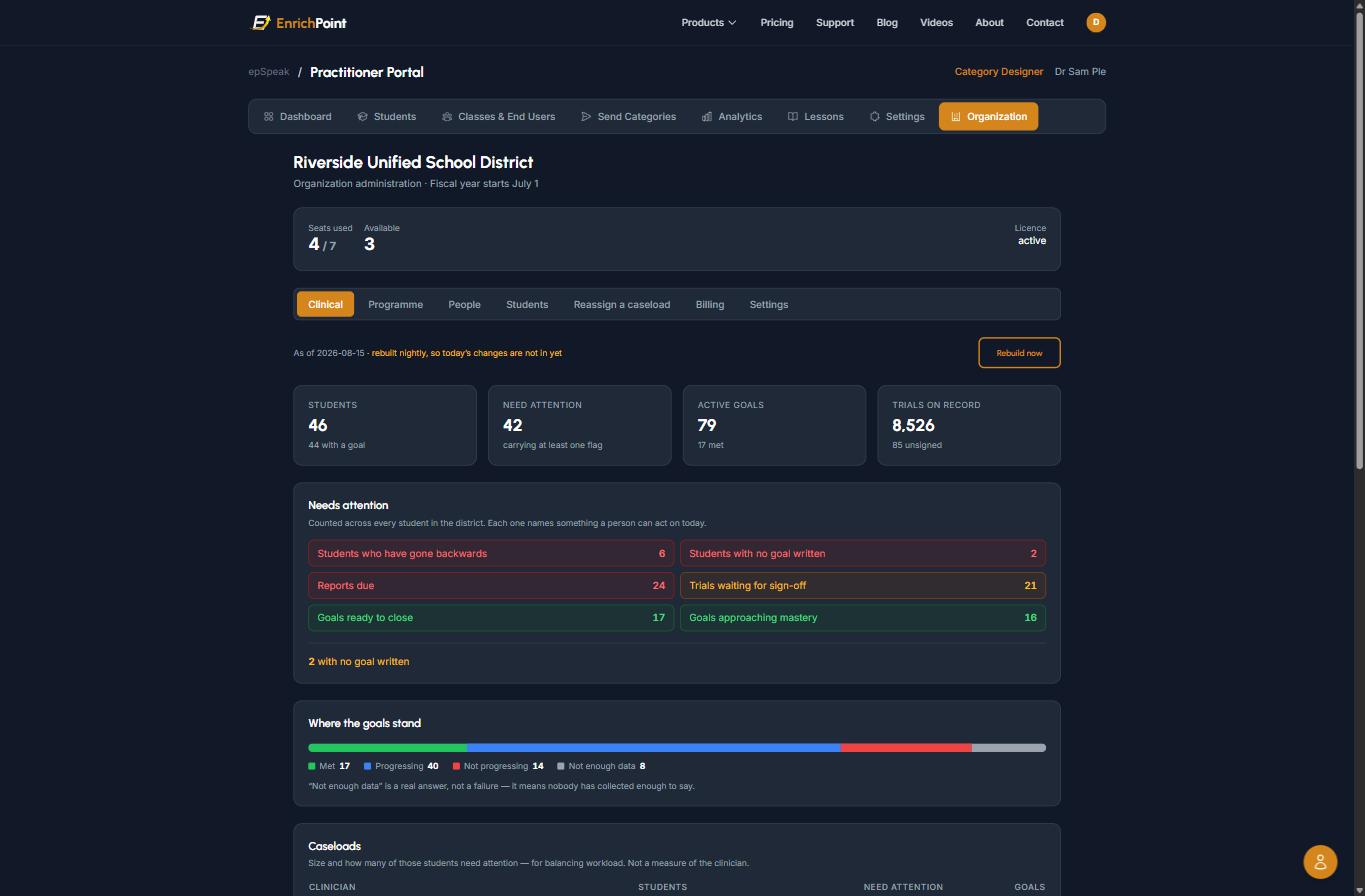
Real screens from our demonstration district. The students are invented; nothing else is.
Devices going quiet, in weeks
Across every clinician: devices not being used, students who have gone backwards, goals without enough data to defend, trials waiting for sign-off. A quiet device is a prompt to check, not a verdict: the student may be absent or have moved.
Measures built to resist gaming
Goal coverage, data sufficiency, device use and attainment against targets. The time-to-mastery measure carries its own warning: a district that writes easier goals will beat its attainment target and get slower here.
Every trial is proposed, then confirmed
When device use matches a goal’s linked vocabulary, single words or combinations as the goal specifies, it is proposed as a trial. It counts only after a clinician confirms it and chooses the support level. The system cannot see modelling or cueing, so it does not guess, and rejected proposals never become evidence.


Reports you can review
Reports are assembled from confirmed trials using templates. There is no language model writing clinical text. The drafted and edited versions are both kept, the report lists what it could not fill in, it flags trials not yet reviewed, and it locks once signed. The evidence pack underneath breaks every goal down by support level.

Clinically honest
It names its weak spots
Goals without enough data and devices that have gone quiet are surfaced, not smoothed over.
Clinicians hold the pen
Prompt level, mastery criterion and which words count are clinical decisions, and they stay with the clinician.
Everything reviewed first
Vocabulary and lesson activities, including anything drafted with AI, are reviewed by a clinician before they reach a device, and families approve category installs.
What it does not do yet
Better you hear it here than halfway through a term.
- The epSpeak app has not had an accessibility audit. The website has a dated audit that names its own gaps.
- Communicative function is recorded on hand-logged trials and exported, but not charted, and proposed trials do not infer it.
- Prompt wording and mastery criteria are set per clinician. There is no organization-wide default yet.
- There is no partner-modelling curriculum. Shared notes give you a thread with the family, not a training program.
Questions
How does epSpeak compare with the AAC systems we already use?
Tell us what matters most to you, whether that is language organization, motor planning, symbol sets or access methods, and we will give you a straight comparison, gaps included, rather than a half-answer here.
Which access methods are supported?
Tell us which your students need and we will answer specifically. The app has not yet been independently assessed for accessibility, and we would rather say so.
Can a clinical lead see every caseload?
Yes. The clinical lead role opens the organization view: needs attention, programme measures, and, where switched on, service delivery and review dates. Caseloads are shown as workload, never ranked.
Can we run a structured evaluation?
Yes. Run a free week against your own criteria on the demonstration caseload. We would like your written feedback, including what is missing.
Evaluate it against your own criteria
Start a free week on the demonstration caseload, or book a demo and bring your list.