
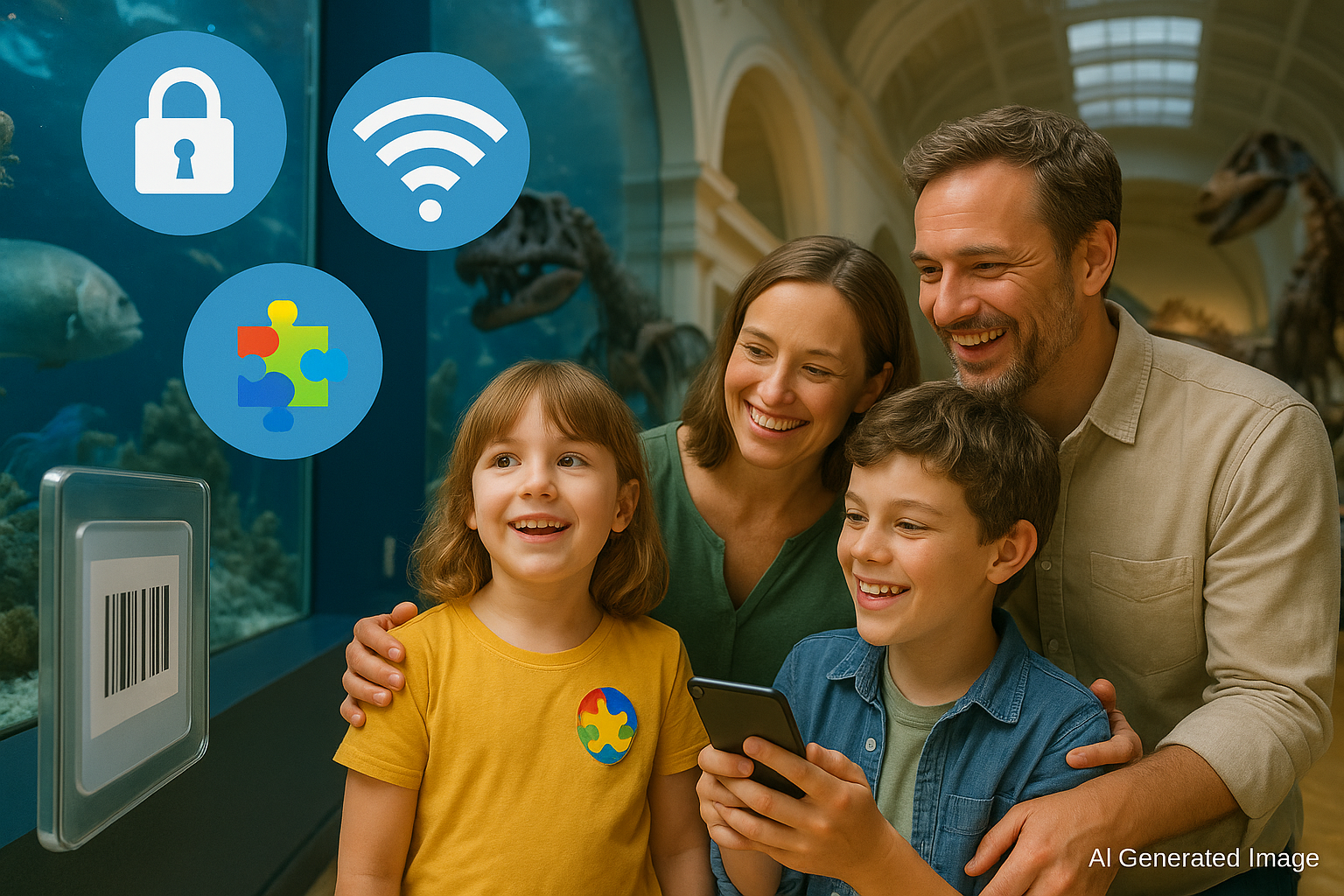
How a sticky note on a fridge, and the trust we placed in the people caring for our grandson, inspired a highly secure, family-first password manager.
It Started With the WiFi Password
When our grandson began receiving support at home, therapists, aides, and specialists coming and going through our front door , we quickly ran into a very ordinary problem: connectivity. Our home sits in an area where 4G and 5G signals are unreliable at best. So sharing our guest WiFi became part of the onboarding ritual for every new person who walked through our door.
We did what most families do. We wrote the password on a piece of paper and stuck it on the fridge.
That was fine... until it wasn't.
Trust That Grows — and So Does the Risk
Over time, as caregivers and therapists built a genuine bond with our grandson, the relationship expanded beyond our home. He began going out with them, to the Aquarium, the Natural History Museum, Botanical gardens, community events. These were beautiful milestones. They represented trust, connection, and growth.
But they also introduced a new layer of complexity. To make those outings happen, we needed to share more:
His membership cards for the Aquarium and Museum, physical cards that could easily be lost or forgotten.
Details about his medications, which ones, what dosage, and critically, what time they needed to be taken, just in case they were out and about when a dose was due.
Updated WiFi passwords when we changed them, because changing the password is the right thing to do when your caregiving team turns over.
The Quiet Risk We Couldn't Ignore
None of this felt dramatic in the moment. But when we stepped back and looked at the full picture, we saw a pattern that gave us pause. We were sharing sensitive information, credentials, medical schedules, membership accounts, through sticky notes, text messages, and verbal hand-offs. With people who had every good intention, but through channels that had no security, no audit trail, and no revocation mechanism.
What if a membership card was lost? What if a caregiver left and still had the WiFi password? What if the medication timing was misremembered? One of the main joys of ours grandsons life was that museum. Even the staff got to know him as a regular. IF we lost his card, it was that much hard for him to get in there. Luckily, they knew him, but what if they didn't? That delay in entry, when you have a special needs child is an extra bit of stress that is just not needed.
These weren't hypotheticals. They were real friction points that real families in our community deal with every single day.
Designing for the Caregiver Relationship
We didn't need just another password manager. We needed one built around the unique dynamics of caregiving. Where a family must extend a degree of trust to outside individuals, while still maintaining control and security.
Let's queue up the technobabble, because it's important to know that this is safe and secure. We are dealing with information that is focused around the most important people in our lives.
That's what epPassword is. At its core, it uses AES-256-GCM encryption and Argon2id key derivation, the same cryptographic standards trusted by security professionals worldwide. But layered on top of that is something we've never seen in a general-purpose password manager: a Caregiver Vault.
The Caregiver Vault lets a family create a curated, controlled space, shared selectively with aides, therapists, and caregivers, using asymmetric key sharing so that access can be granted and revoked without compromising the family's primary vault. The people you trust get exactly what they need. Nothing more, nothing less. And when the relationship changes, so does access.
Built From Experience, Not Just Engineering
Every feature in epPassword traces back to a real moment. The WiFi credential store is the fridge note, done right. The medication schedule entry is the hand-written reminder we used to send in a text. The membership card vault is the physical card we were always nervous about handing over.
epPassword didn't come from a market research report. It came from our family's experience navigating the beautiful, complicated, trust-filled world of caring for someone with special needs, and wanting to make that world a little safer and a little simpler for every family who lives in it.
epPassword is part of the EnrichPoint suite of apps — built by a family, for families.
Get new posts in your inbox
Occasional updates from EnrichPoint, new product launches, blog posts, and tips for caregivers and families. No spam. Unsubscribe anytime.
By subscribing, you agree to receive occasional emails from EnrichPoint. Every email includes a one-click unsubscribe link.